Search This Blog

Wednesday, June 16, 2010

MI AMI 2010: IL FESTIVAL DELLA MUSICA BELLA E DEI BACI

L'inizio dell'estate fa da perfetta cornice al mood festivaliero.
Come potrete immaginare, non mi sono certo lasciato sfuggire l'occasione di partecipare alla sesta edizione di quella celebrazione di musica alternativa tutta italiana che risponde al nome di MI AMI. E' stata una gran festa, lo devo ammettere.
E nonostante la cornice della maggior parte di questi eventi dia spesso l'impressione di voler attirare più l'ambiente alternativo poser e presenzialista che quello realmente interessanto ai suoni nostrani emergenti e di qualità, direi che quest'anno la musica ha vinto, ha fatto da padrona.
Lo si capiva già dalla set list, intendiamoci. Si spazia dagli istrionici Bud Spencer Blues Explosion, agli esordienti Buzz Aldrin, ai nomi di punta delle serate del Pertini. Delle proposte musicali più interessanti che ci ha donato quest' inizio anno il nostro paese, manca forse il solo Samuel Katarro.
Se volete sapere nei dettagli com' è andata, non vi resta che leggere l'ultimo numero di Arts Club, in cui vi è una pagina (la numero 3) completamente dedicata al festival e da me interamente curata. Ho, tra le altre cose, anche fatto un resoconto dettagliato delle esibizioni più belle e particolari a cui ho assistito.
Per iniziare al meglio un estate di festival, bella musica, e baci.

Leggi il quarto numero di Arts Club.


The beginning of summer is the perfect setting for the festival mood.
As you can imagine, I haven't certainly missed the opportunity to participate the sixth edition of the celebration of alternative all-Italian music, who answer the name of MI AMI. It 'was a big party, I must admit.
And despite the setting of most of these events often give the impression of wanting to attract more alternative posers that persons who are really interested in our good emerging sounds, I would say that this year's music has won, has made host.
You could tell right from the set list, mind you. It ranges from the histrionics Bud Spencer Blues Explosion, newcomers Buzz Aldrin, and the deans of the evenings in Pertini. There are the most interesting musical proposals that gave us this beginning of the year our country, perhaps the only missing is Samuel Katarro.
If you want to know in detail how is gone, you just have to read the latest issue of Arts Club, where there is a page (number 3) completely dedicated to the festival and written by me. I, among other things, made a detailed account of the most beautiful and unique performances I attended.
We have to begin a summer of festivals, beautiful music, and kisses.

Read Arts Club number four.

Thursday, June 03, 2010

Arts Club: on-line il terzo numero.

Questa settimana su Arts Club si trattano gli argomenti più disparati, e si passa da un interessante profilo sul duca bianco a un resoconto dettagliato di una serata nel celebre locale da cui prende il nome il suddetto giornale.
Si parla poi di Dum Dum, Girls, The National e vi è una sezione molto più corposa di recensioni.
Di tre di queste (LCD Soundsystem, Gorillaz e Broken Bells) si è occupato il sottoscritto.
Cosa aspettate a leggerle e dirmi cosa pensate?

Leggi il terzo numero di Arts Club.


In this week's Arts Club we are treating varios topics that goes from an interesting profile on white duke to a detailed account of an evening in the famous club to which it is named this magazine.
We also speak of Dum Dum Girls, The National and there's a much more substantial section of reviews.
Three of these (LCD Soundsystem, Gorillaz, and Broken Bells) were written by myself.
Don't wait to read them, and tell me what you think.

Read Arts Club number three.

Wednesday, May 19, 2010

Arts Club: on-line il secondo numero.

Esce oggi il secondo numero di Arts Club, magazine quindicinale con cui ho iniziato a collaborare, allegato alla sezione musicale di Paper Street.
Questo numero è dedicato alla memoria di Ian Curtis, visto che è in uscita mercoledì 19 maggio, il giorno dopo il 30° anniversario della sua morte.
In questo numero ci sono molti articoli interessanti, ma vi suggerisco innanzitutto la visione dei 2 scritti dal sottoscritto, che sono entrambi a pagina 4.
Il primo articolo è una riflessione sui frontman che sempre più spesso improvvisano un avventura solista, il secondo è una recensione dell'ultimo, sorprendente, album dei Foals.
Buona lettura!

Leggi il secondo numero di Arts Club.


Today comes the second issue of Arts Club, fortnightly magazine in which I began to work, supplementing the music section of Paper Street.
This issue is dedicated to the memory of Ian Curtis, as it is released Wednesday, May 19, the day after the 30th anniversary of his death.
In this issue there are many interesting articles, but I suggest watching the two written by myself, who are both on page 4.
The first article is a discussion on frontman that even more often improvise a solo adventure, the second is a review of the last, surprising, Foals album.
Enjoy your reading!

Read Arts Club number two.

Sunday, May 09, 2010

CONCERT REPORT: 28.04.2010 CRYSTAL CASTLES @ MAGAZZINI GENERALI (MI)

Arrivo con amici ai magazzini generali in discreto anticipo per godermi appieno l’unica data dei Crystal Castles in Italia, ma non riusciamo comunque ad assistere all’esibizione dell’opener Tim Ghost.
C’è parecchia gente, già nello spazio adiacente al locale: tutto questo non stupisce, perché i Crystal Castles hanno saputo guadagnarsi grande fama negli ultimi tre anni, passando velocemente dal fenomeno Myspace alla firma per una sussidiaria della Universal.
L’ultimo mercoledì di aprile si rivela una giornata molto calda, e ciò si dimostra fin da subito un dato poco positivo all’interno di un locale come i magazzini, gremito come nelle grandi occasioni.
Riesco anche a scambiare un paio di parole con Ethan prima del concerto e mi sembra disponibile, anche se non molto lucido: mi dice che spera di riuscire a tirare fuori un gran live.
Ho giusto il tempo di dare un’occhiata al consueto spazio merchandising (faccio subito mia una delle loro “Madonna” t-shirt che ho sempre adorato), quando Alice e Ethan salgono sul palco, accompagnati da un batterista.
Il duo di Toronto parte con Fainting Spells, brano di apertura del loro nuovo omonimo disco. Alice Glass dimostra fin da subito un carisma e una personalità invidiabili: gli occhi del pubblico sono tutti verso di lei, anche se la sua voce nei live si dimostra molto più alterata del previsto. I suoni di Ethan si dimostrano una perfetta cornice ai movimenti ossessivi di Alice, che nonostante i suoi ventun’anni sfodera una presenza scenica da rocker navigata.
Il secondo brano è il magistrale Baptism, pezzo migliore del loro nuovo (poco più che discreto) lavoro e che, a mio avviso, avrebbe dovuto rappresentare l’essenza musicale di questi nuovi Crystal Castles.
Il pubblico dimostra di pensarla come me sulla suddetta canzone, e la accoglie con grande calore. A questo punto il gruppo sfodera un altro jolly, la magnifica Courtship Dating (conosciuta ai più in quanto colonna sonora del telefilm d’oltremanica Skins) tratta dal proprio esordio.
Successivamente vi è un trittico di nuovi pezzi: Celestica, Doe Deer e Emphaty. Di queste tre, l’ultima mi ha veramente convinto solo nella sua versione live, più energica e grezza.
A questo punto la situazione all’interno del locale è già diventata ingestibile, grazie al pogo rovente ma soprattutto al crowdsurfing di Alice, che inizia a buttarsi più volte tra il pubblico delle prime file facendosi tenere a stento dalla security.
La folla dimostra di apprezzare, partecipa ancora più attivamente all’esecuzione dei pezzi e quando arriva il momento di Alice Practice (suonata dopo Air War e Crimewave, che rimane secondo me l'episodio migliore della intera discografia del duo) ne urla anch’esso la ormai conosciutissima melodia.
Dopo un altro riempipista tratto dal loro nuovo lavoro (la secondo me quasi anonima Intimate) e meno di un ora di frenetico live, il gruppo ci lascia, con un po’ di amaro in bocca, già in attesa dell’encore.
Dopo il veloce ritorno sul palco il gruppo propone al pubblico l’energica Black Panther e il B-Side Yes No.
Nonostante la acustica non proprio ineccepibile (anche causa posizionamento casse forse un po’ troppo creativo) e la breve durata dell’esibizione, i Crystal Castles hanno dato prova di saper creare un live coinvolgente e divertente. Alice Glass poi è una forza della natura, e dopo il suddetto concerto credo abbia fatto breccia in molti cuori (tra cui il mio).
Peccato per quel secondo album un po’ sconclusionato, che avrebbe forse dovuto seguire di più le ultime intuizioni musicali dei meno celebri HEALTH.


I arrive with friends at Magazzini generali quite early to fully enjoy the only italian date of Crystal Castles, but I still fail to attend the exhibition of the opener Tim Ghost.
There is a lot of people already in the space adjacent to the club: this is not surprising, because the Crystal Castles have been able to earn great fame in the last three years, moving quickly from MySpace phenomenon to sign for a subsidiary of Universal.
The last Wednesday of April, reveals a very hot temperature, and this proves to be quite disappointing in a place like the magazzini, crowded as in the big occasions.
I can also exchange a few words with Ethan before the concert and it seems friendly, though not very lucid: he says he hopes to be able to pull off a great live.
I just have time to check out the usual merchandising space (where I buy one of their "Madonna" t-shirt I've always loved), when Alice and Ethan go up on stage, accompanied by a drummer.
The duo of Toronto begin with Fainting Spells, the opening track from their new self-titled disc. Alice Glass shows immediately an enviable charisma and personality: the eyes of the public are all for her, although her voice in live shows is much more affected than expected. The sounds of Ethan prove a perfect backdrop to the movements of obsessive Alice, who, despite her twenty-one years of age, shows off a stage presence of real rocker.
The second track is the masterful Baptism, best track of their new (slightly more than adequate) LP and is the expression, in my opinion, of what should be the musical essence of the new Crystal Castles.
The crowd clearly agree with me concerning this song, and welcomes it with great fervour. At this point the group pulls out another wild card, the magnificent Courtship Dating (better known as the soundtrack of the british tv show Skins) from their debut album.
Then there is a triptych of new pieces: Celestica, Doe Deer and Emphaty. The third one really convinced me only in its live version, that is more energetic and raw.
At this point the situation within the club has already become unmanageable expecially for Alice crowdsurfing. The singer in fact begins to jump repeatedly between the front rows of the audience, hardly kept from the club security.
The crowd seems to enjoy and partecipate more actively: when begins Alice Practice (played after Air War and Crimewave, which remains in my opinion the best episode of the entire discography of the duo) it also screams the now well-known melody.
After another floorfiller from their new record (that anonymous track called Intimate) and less than an hour of frenetic live, the band leaves us with a bitter taste in mouth, already waiting for encore.
After the quick return on stage the duo offers the public the energic Black Panther and the B-Side Yes No.
Despite the sound not quite flawless (due to a speaker placement a bit too creative) and the short duration of the exhibition, Crystal Castles have demonstrated their ability to create an engaging and entertaining live. Alice Glass is also a force of nature, and after this concert I think he made a open breach in many hearts (including mine).
Too bad that this second album is a bit rambling, perhaps it should have followed the last musical intuitions of the less famous band HEALTH.

Tuesday, May 04, 2010

SURFER BLOOD - ASTRO COAST

I Surfer Blood testimoniano, se ancora ce ne fosse bisogno, il buon momento di forma che sta vivendo l’indie pop a stelle e strisce, e la Florida (già patria degli ormai celebri Drums) più in particolare.
Astro Coast rappresenta la prima prova per questo gruppo di ragazzotti provenienti da West Palm Beach, che, nonostante le inevitabili pecche di gioventù, può tutto sommato considerarsi superata.
Il disco è caratterizzato per tutti i 40 e più minuti della sua durata da un suono lo-fi prevalentemente chitarristico, infarcito qua e là da citazionismi noise anni 90 ma che si rivela fin dal primo ascolto profondamente eclettico.
I testi del quartetto invece, il più delle volte, farebbero felice il più classico dei Seth Cohen, in quanto spesso teatro di paranoia e inadeguatezza: rispetto al futuro, rispetto all’amore e rispetto alla complicazione dei rapporti interpersonali in generale.
L’influenza in questo caso deriva, più che dai cupi da Death Cab, dagli Shins. Anche la voce del cantante J.P. Pitts è particolarmente simile (soprattutto in certi frangenti) a quella di James Mercer, ma la brillantezza lirica di quest’ultimo si rivela ancora lontana.
Il primo brano, Floating Vibes, dimostra fin da subito la capacità dei Surfer Blood di ricamare su riff di chitarra melodie accattivanti, parlando però di un amaro addio.
Swim è il singolone del disco: trascinante fin dal primo ascolto, ricorda i grandi Weezer del Blue Album.
I due brani successivi procedono, gradevoli e senza intoppi, sulla falsariga di Floating Vibes.
Neightbour Riffs è un gustoso strumentale che reinterpreta la nostalgica surf music dei Beach Boys come molti gruppi, Real Estate su tutti, hanno insegnato ultimamente. Rimane uno dei pezzi più belli dell’LP.
Twin Peaks è un altro pezzo riuscito: il titolo allude alla frustrazione sessuale provata del protagonista nell’utilizzare il divano di un’ amica solo per guardare i film di Lynch.
Slow Jabroni è in perfetto stile Shins, e ci lascia ai due brani che chiudono il disco, che sono Anchorage (forse il pezzo più debole del disco, ci parla di un distacco autoimposto rispetto alle emozioni) e Catholic Pagans, malinconico ma azzeccatissimo finale.
Così, su un quieto “so I have to go” in dissolvenza ,si chiude quest’album.
Un album con pezzi freschi e privo di particolari cali.
Per i più sarà un semplice riempitivo per questa primavera, per gli amanti dell’immaginario dei 90s’ e delle atmosfere marittime dal sapore retrò, sarà invece un fido compagno per gli anni e le estati a venire. 8


Surfer Blood testify the good form that is experiencing the indie pop in the USA, and particolarly in Florida (former home of the now famous Drums).
Astro Coast is the first test for this group of boys from West Palm Beach, and despite the inevitable pitfalls of youth, may after all be surpassed.
The disc features in his 40 minutes a predominantly lo-fi guitar sound, peppered here and there quotations from noisepop of the 90s' and is since the first listen deeply eclectic.
The texts of the quartet, in most cases, would satisfy the classic Seth Cohen, because his constant references too paranoia and inadequacy: about the future, about love and about the complexity of interpersonal relationships in general.
The influence here can be found in the the Shins rather than in the darker Death Cab. Even the singer's voice J.P. Pitts is very similar (especially in certain parts) of James Mercer tone, but the lyrical brilliance of the Shins' singer it is even far away.
Floating Vibes, the first track, shows immediately the ability of Surfer Blood to embroider guitar riffs and catchy melodies.
Swim it's the main single of the LP: gripping from the first listen, recalls the great Weezer's Blue Album.
The two subsequent tracks carry on pleasing, and smoothly along the lines of Floating Vibes.
Neightbour Riffs is a tasty instrumental, surf-music inspired, that reinterprets the the Beach Boys sounds as many groups (Real Estate, for example) have taught recently. Remains one of the finest tracks of the record.
Twin Peaks is another good song: the title alludes to the sexual frustration of the protagonist, forced to use the sofa of a friend only girl to watch movies of Lynch.
Slow Jabron it's a Shins style song, and leaves us with the two tracks that close the LP, which are Anchorage (perhaps the weakest song of the record) and Catholic Pagans, that fits perfectly as melancholy final track of the record.
So, on a quiet "I know I have to go" the album fade.
An album with fresh and spare no special drops.
A fresh album that, for lovers of 90s imaginary and retro-surf feeling, it will be a faithful companion for years and summers to come. 8

Friday, April 23, 2010

L'ANGOLO DEL DESIGN: “!” MOMENT

di Mattia Fossati

Nendo, dal giapponese, letteralmente, “Creta”; materiale versatile che si presta ad infinite applicazioni.
Lo studio di designer giapponesi capitanati da Oki Sato si adatta perfettamente a questa descrizione, ed è riuscito a conquistarsi, nel giro di pochi anni, un posto di tutto rispetto all’interno del panorama internazionale del design.
Oki Sato nasce a Toronto, in Canada, nel 1977 e si laurea nel 2002 alla Waseda University di Tokyo; nello stesso anno viene premiato con la medaglia d’oro alla Kazumi International Lighting design e fonda, sempre a Tokyo, lo studio Nendo.
A soli 32 anni Sato può vantare uno studio con due sedi (Milano e Tokyo) che è stato segnalato da Newsweek come una delle migliori 100 piccole aziende giapponesi, numerose menzioni in concorsi internazionali, collezioni esposte al MOMA di New York, al Musee des Arts decoratifs di Parigi ed in altri importanti Musei nel mondo.
Nendo si occupa di design, arredamento di interni ed architettura, con un approccio progettuale mai banale, eclettico e sempre in grado di stupire, al quale si affianca un’attenzione maniacale per l’aspetto formale e funzionale del prodotto.
All’attività progettuale e di comunicazione si unisce l’intensa attività di ricerca che ha portato lo studio alla notorietà grazie ad oggetti che stupiscono ed introducono utilizzi inediti dei materiali di tutti i giorni (è l’esempio della carta per progetti come la “Cabbage Chair”) o che decontestualizzano materiali utilizzati da sempre in altri ambiti, per creare esperienze nuove ed intriganti.
Ne sono un chiaro esempio prodotti come “Polar”, tavolo con struttura in metallo e piano di appoggio in vetro polarizzato, che sovrapposto ad altri, lascia comparire una texture floreale; oppure le famose “Chocolate Pencil” penne di cioccolato da temperare sopra i propri dolci preferiti; o ancora la lampada “Hanabi” che, grazie all’utilizzo di materiale a memoria di forma, si apre come un fiore una volta accesa.
Alla produzione di tipo industriale ed alla collaborazione con aziende del calibro di Cappellini, Oluce, Lexus, De Padova, ecc…, Nendo affianca oggetti prodotti in serie limitate che si affidano all’abilità ed alla manualità degli artigiani locali, creando delle vere e proprie collezioni “esclusive” fortemente legate alla cultura materiale ed al know how del posto.
E’ interessante, a questo proposito, osservare prodotti come la “Cord Chair”, sedia in legno con gambe del diametro di 15 mm, che grazie alla sapienza degli artigiani della Hiroshima Prefecture manufacturing Maruni Wood, ha, inserita all’interno una struttura in tondino metallico del diametro di 9mm.
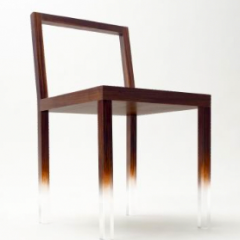
O ancora la “Fadeout Chair”, sedia che sembra galleggiare nell’aria grazie alla gambe, in materiale acrilico (dipinte manualmente) che si dissolvono lentamente.
Oki Sato ed i ragazzi di Nendo sono la prova delle infinite possibilità che attività come il design ed in generale la ricerca progettuale possono offrire se condotte con capacità e metodo, rendendo i prodotti sempre interessanti e distaccandosi totalmente dall’idea effimera del designer come semplice “stilista” di oggetti.
Come direbbero i ragazzi di Nendo non resta che prepararci per un’altro “!” Moment!


by Mattia Fossati

Nendo, from Japanese language, literally, "Crete": versatile material that lends itself to endless applications.
The study led by Japanese designer Oki Sato fits this description, and managed to win in a few years, a important place on the international scene of design.
Oki Sato was born in Toronto, Canada, in 1977 and graduated in 2002 at Waseda University in Tokyo. In the same year was awarded with the gold medal at the International Lighting Design Kazumi and he based, again in Tokyo, the study Nendo.
The just 32 years old Sato boasts a studio with two offices (Milan and Tokyo) that was reported by Newsweek as one of the best 100 small Japanese companies, with many mentions in international competitions, collections displayed at MOMA in New York, at Musee des Arts Decoratifs in Paris and in other major museums in the world.
Nendo covers design, interior design and architecture, with a design approach not boring, eclectic and always able to surprise, accompanied by maniacal attention to the formal and functional product.
Work in design and communication is combined with the intense research that led to the study of objects that amaze and introduce use of unpublished material every day (an example is the paper for projects like the "Cabbage Chair ") or materials used decontextualize always elsewhere, to create new and intriguing experience.
Clear example of this are products such as "Polar" table with metal frame and polarized glass shelf, which overlapped with other leaves shows a floral texture; or the famous "Chocolate Pencil" useful to temper chocolate on your favorite desserts, or even the"Hanabi" lamp that, with the use of shape memory material, opens like a flower once turned on.
Between the industrial production, the collaboration with companies such as Cappellini, Oluce, Lexus, De Padova, etc ... Some Nendo objects are produced in limited series that rely on the skill and craftsmanship of local artisans, creating real collections "exclusive" strongly linked to material culture and know-how of the place.
It 's interesting in this regard, see the product "Cord Chair", with wooden chair legs with a diameter of 15 mm, in wich the wisdom of the craftsmen of Hiroshima Prefecture manufacturing Maruni Wood inserted inside a structure metal rod with a diameter of 9mm.
Or the "fadeout Chair, a chair that seems to float in the air thanks to the legs, acrylic (hand painted) that dissolve slowly.
Oki Sato and Nendo boys are proof of the infinite possibilities that activities such as design and general design research can offer if conducted with skill and method, making the products more attractive and totally separated from the idea of designers as mere ephemeral items.
As Nendo boys say do all you gonna do is prepare yourself for another "!" Moment!

Monday, April 19, 2010

CARIBOU - SWIM

In alcune, rare, occasioni il titolo e la copertina di un album possono rivelarsi un chiaro affresco del processo creativo utilizzato da un musicista per approcciarsi alla sua opera.
Questa ultima fatica del polistrumentista canadese Caribou (ex Manitoba) ne è una palese prova.
Il titolo dell’Lp, Swim, e il vortice dai colori caldi che fa capolino sulla copertina dal minimale sfondo nero, ci danno la giusta percezione visiva di quello che sentiremo appena avremo pigiato play per ascoltare il disco.
Un flusso di suoni ipnotici e psichedelici ma profondi, caratterizzati da un raggio di effetti ondeggianti e densi, atti a plasmare una musica elettronica in cui i ricorsi citazionistici (che spaziano dalla minimal all’attitudine danzereccia DFA, passando attraverso il folk-soul della bellissima Jamelia) si sprecano, ma vengono reinterpretati alla perfezione proponendo un sound eclettico ma accessibile.
Con Swim, Caribou si permette di nuotare, appunto, in atmosfere che sono, in molti brani, più calde di quelle delle normali opere elettroniche.
Questo perché i pezzi di quest’album sono frutto di una perfetta commistione tra suoni sintetici, inserti chitarristici e addirittura incursioni fiatistiche (vedi Leave House, pezzo a tratti etnico ma con un beat alla LCD Soundsystem).
Il singolo e prima canzone del disco, Odessa, è la quint’essenza di questa attitudine compositiva: qui Caribou gioca un po’ a fare il James Murphy, e un po’ il Panda Bear della situazione (una attitudine che si ripresenterà in Bowls, che spicca per svariate incursioni di archi e cowbells).
Si può ancora citare Kaili, brano tra i migliori del disco e in cui il cantato assume un ruolo chiave nella resa emotiva del pezzo, testimoniando ancora una volta che l’intenzione è quella di umanizzare più possibile certi suoni robotici.
Swim è insomma un album che, nonostante la sperimentazione, brilla di luce propria in praticamente ogni pezzo e che, nonostante non segua il sentiero folk-tronico che Caribou aveva tracciato con Andorra, riesce a dimostrare abilità e verve compositiva. 9


In some, rare occasions the title and the album cover can be a clear fresco of the creative process used by a musician in approach to his work.
This last effort of the Canadian multi-instrumentalist Caribou (formerly Manitoba) it is a manifest proof.
The title of the LP, Swim, and the vortex of warm colors peeping out from the cover minimal black background, give us the right visual perception of what we feel once we press play to listen to the disc.
A stream of sounds, hypnotic and psychedelic but deep, featuring a range of effects flowing and dense, capable of shaping an electronic music that appeals citationistical (ranging from minimal attitude dancy DFA, through the folk-soul of the beautiful Jamelia) but reinterpreted to perfection by proposing an eclectic but accessible sound.
With Swim, Caribou is allowed to swim (that's it) in atmospheres that are, in many songs, warmer than normal electronic works.
This is because the tracks of this album are the result of a perfect blend of synths, guitar and even raids flute inserts (see Leave House, sometimes ethnic piece but with a beat to LCD Soundsystem).
The single and first song on the disc, Odessa, is the quintessence of this compositional attitude: Caribou here plays a little 'to do the James Murphy, and a bit' the Panda Bear of the situation (an attitude that will recur in Bowls, that stands for several incursions of strings and cowbells).
I can still quote Kaili, one of the best track of the disc where the singing takes on a key piece in the emotional appeal of the song, testifying once again the clear intention is to humanize certain robotic sounds.
Swim is an album that, despite testing, shines its light on virtually every piece, and although not follow the path folk-tronic that Caribou had begun with Andorra, is able to demonstrate skill and verve composition. 9