Search This Blog

Showing posts with label Design. Show all posts

Friday, April 23, 2010

L'ANGOLO DEL DESIGN: “!” MOMENT

di Mattia Fossati

Nendo, dal giapponese, letteralmente, “Creta”; materiale versatile che si presta ad infinite applicazioni.
Lo studio di designer giapponesi capitanati da Oki Sato si adatta perfettamente a questa descrizione, ed è riuscito a conquistarsi, nel giro di pochi anni, un posto di tutto rispetto all’interno del panorama internazionale del design.
Oki Sato nasce a Toronto, in Canada, nel 1977 e si laurea nel 2002 alla Waseda University di Tokyo; nello stesso anno viene premiato con la medaglia d’oro alla Kazumi International Lighting design e fonda, sempre a Tokyo, lo studio Nendo.
A soli 32 anni Sato può vantare uno studio con due sedi (Milano e Tokyo) che è stato segnalato da Newsweek come una delle migliori 100 piccole aziende giapponesi, numerose menzioni in concorsi internazionali, collezioni esposte al MOMA di New York, al Musee des Arts decoratifs di Parigi ed in altri importanti Musei nel mondo.
Nendo si occupa di design, arredamento di interni ed architettura, con un approccio progettuale mai banale, eclettico e sempre in grado di stupire, al quale si affianca un’attenzione maniacale per l’aspetto formale e funzionale del prodotto.
All’attività progettuale e di comunicazione si unisce l’intensa attività di ricerca che ha portato lo studio alla notorietà grazie ad oggetti che stupiscono ed introducono utilizzi inediti dei materiali di tutti i giorni (è l’esempio della carta per progetti come la “Cabbage Chair”) o che decontestualizzano materiali utilizzati da sempre in altri ambiti, per creare esperienze nuove ed intriganti.
Ne sono un chiaro esempio prodotti come “Polar”, tavolo con struttura in metallo e piano di appoggio in vetro polarizzato, che sovrapposto ad altri, lascia comparire una texture floreale; oppure le famose “Chocolate Pencil” penne di cioccolato da temperare sopra i propri dolci preferiti; o ancora la lampada “Hanabi” che, grazie all’utilizzo di materiale a memoria di forma, si apre come un fiore una volta accesa.
Alla produzione di tipo industriale ed alla collaborazione con aziende del calibro di Cappellini, Oluce, Lexus, De Padova, ecc…, Nendo affianca oggetti prodotti in serie limitate che si affidano all’abilità ed alla manualità degli artigiani locali, creando delle vere e proprie collezioni “esclusive” fortemente legate alla cultura materiale ed al know how del posto.
E’ interessante, a questo proposito, osservare prodotti come la “Cord Chair”, sedia in legno con gambe del diametro di 15 mm, che grazie alla sapienza degli artigiani della Hiroshima Prefecture manufacturing Maruni Wood, ha, inserita all’interno una struttura in tondino metallico del diametro di 9mm.
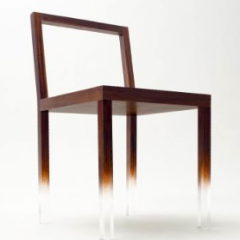
O ancora la “Fadeout Chair”, sedia che sembra galleggiare nell’aria grazie alla gambe, in materiale acrilico (dipinte manualmente) che si dissolvono lentamente.
Oki Sato ed i ragazzi di Nendo sono la prova delle infinite possibilità che attività come il design ed in generale la ricerca progettuale possono offrire se condotte con capacità e metodo, rendendo i prodotti sempre interessanti e distaccandosi totalmente dall’idea effimera del designer come semplice “stilista” di oggetti.
Come direbbero i ragazzi di Nendo non resta che prepararci per un’altro “!” Moment!


by Mattia Fossati

Nendo, from Japanese language, literally, "Crete": versatile material that lends itself to endless applications.
The study led by Japanese designer Oki Sato fits this description, and managed to win in a few years, a important place on the international scene of design.
Oki Sato was born in Toronto, Canada, in 1977 and graduated in 2002 at Waseda University in Tokyo. In the same year was awarded with the gold medal at the International Lighting Design Kazumi and he based, again in Tokyo, the study Nendo.
The just 32 years old Sato boasts a studio with two offices (Milan and Tokyo) that was reported by Newsweek as one of the best 100 small Japanese companies, with many mentions in international competitions, collections displayed at MOMA in New York, at Musee des Arts Decoratifs in Paris and in other major museums in the world.
Nendo covers design, interior design and architecture, with a design approach not boring, eclectic and always able to surprise, accompanied by maniacal attention to the formal and functional product.
Work in design and communication is combined with the intense research that led to the study of objects that amaze and introduce use of unpublished material every day (an example is the paper for projects like the "Cabbage Chair ") or materials used decontextualize always elsewhere, to create new and intriguing experience.
Clear example of this are products such as "Polar" table with metal frame and polarized glass shelf, which overlapped with other leaves shows a floral texture; or the famous "Chocolate Pencil" useful to temper chocolate on your favorite desserts, or even the"Hanabi" lamp that, with the use of shape memory material, opens like a flower once turned on.
Between the industrial production, the collaboration with companies such as Cappellini, Oluce, Lexus, De Padova, etc ... Some Nendo objects are produced in limited series that rely on the skill and craftsmanship of local artisans, creating real collections "exclusive" strongly linked to material culture and know-how of the place.
It 's interesting in this regard, see the product "Cord Chair", with wooden chair legs with a diameter of 15 mm, in wich the wisdom of the craftsmen of Hiroshima Prefecture manufacturing Maruni Wood inserted inside a structure metal rod with a diameter of 9mm.
Or the "fadeout Chair, a chair that seems to float in the air thanks to the legs, acrylic (hand painted) that dissolve slowly.
Oki Sato and Nendo boys are proof of the infinite possibilities that activities such as design and general design research can offer if conducted with skill and method, making the products more attractive and totally separated from the idea of designers as mere ephemeral items.
As Nendo boys say do all you gonna do is prepare yourself for another "!" Moment!

Friday, March 12, 2010

L'ANGOLO DEL DESIGN: SMART MATERIALS E LORO APPLICAZIONE

di Mattia Fossati

Il mondo è in costante movimento, il cambiamento si fa sempre più veloce, e la tecnologia, parte integrante della nostra vita, è diventata indispensabile ed ha aperto, in tutti i campi, nuove strade di cui non si vede la fine.
Il settori del design e dell’architettura si sono avvalsi da sempre (e sicuramente hanno contribuito) dello sviluppo tecnologico, in particolare di quello dei nuovi materiali e delle correlate tecniche di produzione.
Da qualche anno a questa parte hanno assunto crescente importanza (in ambito progettuale) i cosidetti “Smart Materials”, materiali altamente performanti in grado di fornire prestazioni al di fuori della norma ; questi materiali diventano “furbi” grazie alla loro particolare composizione, all’additivazione di sostanze o altri materiali, o ancora, grazie all’inclusione, al loro interno, di dispositivi digitali.
I materiali riconducibili alla categoria “smart” sono tantissimi e le applicazioni nel campo del design ed in generale della progettazione sono praticamente infinite.
Basti pensare ai materiali piezoelettrici, che creano energia quando compressi, ai materiali a memoria di forma, che tornano sempre alla forma di partenza o a quella che l’utente ha voluto imprimere; a quelli che tengono sotto controllo il Ph, piuttosto che la temperatura corporea o la sudorazione, oppure a quelli antibatterici ed antiodore (solitamente grazie all’inclusione di ioni d’argento); o ancora i vetri autopulenti (grazie alla presenza di biossido di titanio). Ed infine, quelli di cui mi occuperò nello specifico, e che si prestano ad applicazioni più “giocose”, i materiali che includono inchiostri termocromici, capaci di cambiare colorazione in base alla temperatura e di tornare allo stato originario quando la reazione finisce.
Negli ultimi tempi si sono confrontati con questi materiali centinaia di designer, dai più blasonati ai più sconosciuti; i risultati non sempre sono stati esaltanti ma sicuramente hanno contribuito ad aprire nuovi scenari e nuovi mondi rispetto alle capacità emozionali che coinvolgono un determinato materiale ed il rapporto tra l’utente ed esso.
Basti pensare al cemento “Solid Poetry” creato da S. Happle e F. Molenschot, del gruppo olandese Droog Design, gruppo già molto noto per l’attività di ricerca che svolge e per oggetti diventati, nel corso di pochissimi anni, dei “classici” come la “85 Lamps” o la “Milk Bottle Lamp”.
Il cemento creato dai due designer reagisce a contatto con a pioggia ( e più semplicemente con l’acqua) lasciando apparire una texture floreale, serigrafata direttamente sul cemento con inchiostro termocromico.
Altro prodotto degno di nota, anche se ancora in fase di sviluppo, che sfrutta lo stesso principio, è la tovaglia “Underfull” della designer Kristine Bjaadal, designer che da sempre si occupa, più che della linea di un prodotto, dell’esperienza che esso è in grado di regalare all’utente.
La tovaglia in questione ripensa e ridisegna completamente le dinamiche che ruotano attorno al classico incidente da tavola: rovesciare bibite, acqua, vino, ecc…..
Quando una bevanda viene rovesciata sulla tovaglia compare una texture rappresentante delle farfalle che trasforma quindi l’incidente in un’esperienza affascinante e divertente.
L’artista Shi Yuan, invece, ha creato, grazie a questa tecnologia, una carta da parati con rappresentato un fiore, che si apre e si chiude a seconda della temperatura della stanza.
Di esempi di questo tipo ce ne sarebbero ancora molti ed altrettanti prodotti dello stesso genere sono probabilmente in fase di sviluppo nel momento stesso in cui scrivo.
Non resta che rimanere in osservazione per capire fino a che punto ci si potrà spingere per regalare nuova espressività e brio a oggetti e materiali di tutti i giorni, e fino a che punto si potrà sfruttare quest’”intelligenza” che stiamo dando ai vari sopracitati materiali per migliorare a nostra vita e quella degli altri.


by Mattia Fossati

The world is in constant motion, the change is getting faster, and technology, an integral part of our lives, has become essential and has open in all fields, new roads for which no end in sight.
The fields of design and architecture have always used (and certainly contributed) technology development, especially with the use of new materials and their related production techniques.
For some years now have taken on increasing importance (within design) the so-called "Smart Materials", high performance materials able to provide services outside of the norm, these materials become "Smart" because of their special composition of substances or for their additivity with other materials, or through the inclusion, within them, of digital devices.
The materials linked to the "smart" are lots and the applications in general design are virtually endless.
Just think of the piezoelectric material, which create energy when compressed to Shape memory materials, which always return to the initial form or that the user wished to impress, to those that control the pH, rather than the body temperature or perspiration, or those antibacterial and odor (usually through the inclusion of silver ions); or even the self-cleaning glass (thanks to the presence of titanium dioxide). And finally, those of which I will deal specifically, and that lend themselves to more "playful" applications, the materials include thermochromic inks, able to change color according to temperature and return to the original state when the reaction ends.
Recently, hundreds of designers played with the features of this materials, from
the most renowned to the most unknown, and the results were not always exciting, but they certainly helped to open new scenarios and new worlds with emotional capacities that involve a material and the relationship between you and it.
Just think of the concrete "Solid Poetry" created by S. Happle and F. Molenschot of Dutch group Droog Design, the group already well known for its research activities placed and objects become, in the course of a few years, "classics" (as the "85 Lamps" or "Milk Bottle Lamp").
Cement created by two designers react with rain (and more just with water) open up to reveal a texture of floral silkscreen directly on cement with thermochromic ink.
Another product worth mentioning, although still under development, which exploits the same principle, is the cloth "underfull" of designer Kristine Bjaadal, who always takes care rather than a product line, the experience that the object it's able to give you.
The cloth in question completely rethinks and redesigns the dynamics revolve around the classic incident table: overthrow drinks, water, wine, etc ... ..
When a drink is reversed on the tablecloth displays a texture representative of the butterflies which then turns an accident into something fascinating and fun.
The artist Shi Yuan, however, has set up, thanks to this technology, a paper wall represented by a flower that opens and closes depending on the room temperature.
Probably still many products of the same kind are being developed at the same time I write.
All that remains is to observe and see how far we can push to give new expression to objects and materials of all days, and how far we can exploit this 'intelligence' that we are giving to the various aforementioned materials to improve our lives and that of others.